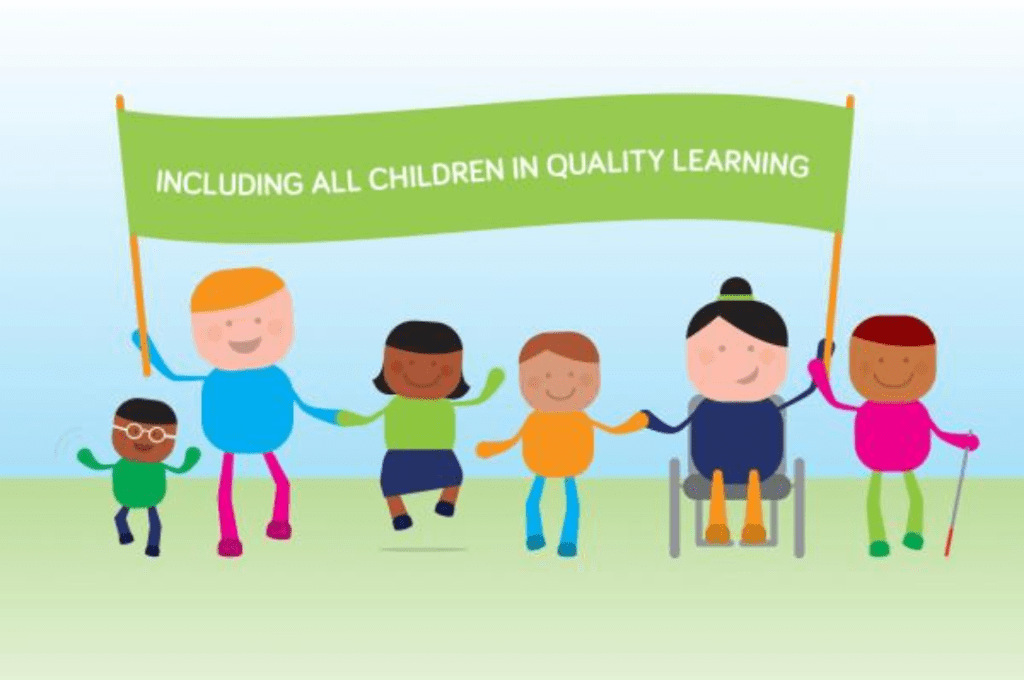
As well stipulated in the 2030 Agenda for Sustainable development, goal number four (4) to ensure inclusive and equitable quality education and promote lifelong learning opportunities for all. In this essay I am discussing the efforts to make education more inclusive and accessible for all youths including efforts of the youths themselves,
Inclusive education in all its entirety is a process involving the transformation of schools and other centres of learning so as to cater for all children including girls and boys, learners from ethnic minorities, those affected by diseases like HIV/AIDs and those with disabilities and learning difficulties hence inclusive education is not a marginal issue but its central to achievement of high quality education for all hence the realisation of the millennium and sustainable development goals of eradicating extreme poverty, achieving universal primary education and addressing global wicked problems especially climate change contributing to the broader goals of social justice and social inclusion.
In this essay I shall explicate on the notion by giving a bit of the history of education, highlight the status quo of education in line with the effort that are already underway to transform education and the more that can be done to transform education while being very comparative while using Uganda’s education system as our perimeter of reference as we benchmark other education systems across. However much there are efforts already underway, this essay intends to make a statement that a lot more can be done as well explicated there in below.
I intend to first consider the fact that education has a long history that can be traced over time and various schools of thoughts have defined education differently however we want to pivot our essay on the basis that education is the process of breeding, bringing up, rearing and training to lead forth, to take out, to rise up and erect or conduct learning which is the acquisition of knowledge, skills, values, beliefs and habits literary meaning that an individual who goes through this process should come out as a wholly changed individual ( holistic)this therefore drives us to a number of questions;
1).Is the education in the 21st century inclusive? 2). Is it easily accessible to most of the young people?? These questions directly appeal mostly to the developing countries and they clearly speak to status quo of most of them. As reported by UNESCO that in all levels of education, broadly speaking, enrolment increased substantially for school age children and youths and much of this enrolment is as a result of the contribution of a number of stakeholders that is the governments, youth led organisations and the youth themselves. Citing Uganda as our area of focus, the Government established the UPE as an education policy as a commitment by the NRM Government to ensure that primary education is accessible to all social classes which saw the current enrolment of primary pupils rise to 8.4 million and yes the contribution of UPE to increase enrolment cannot be swept under the carpet however one would question the extent to which it has been a success.
Youth led organisations have equally backed such inclusive policies by doing a great deal of sensitisation easing government’s work, such as the Serve Uganda Initiative (SUI), Rich A Hand Uganda (RAHU), MasterCard foundation (BRAC) and Youth Alive Uganda which in accordance to their goals and objectives show utter interest in how the youth learn, what they learn and its impact on their lives.
The concept of transforming education is one that requires us to approach with contextual understanding and an understanding of the social, economic and ecological dimensions for to transform the education system varies according to the mentioned dimensions. Globally there is a wide spread concern about the factors that generate exclusion and this could be better addressed through the definitions and implementation of appropriate inter-sectoral policies focussed on the causes both outside and within education.
I in the first place cite the fact that education challenges should be tackled from a right based perspective, since each individual possess a fundamental right regardless of their differences to fully develop their potentials all this done to include the whole lot. To wholly include all youths from across, one must bear in mind that these young people have fundamental rights despite their differences and to boost each one’s potential is the ultimate goal of education. We therefore envision an education that conforms with the interests of the learners in a way that if a learner has great interest in playing soccer, mechanics or arts they should not be subjected to disciplines that do not conform with their interests, youth led organisations should speak louder about such inclusion for its the ideal inclusion the youth seek before the new industrial revolution is ushered in.
The other I suggest should be the expansion of early childhood care and education services, international research by global education organisations especially UNESCO justify the fact that for one to be wholly educated and for all to be fully included then one must be tapped right from infancy meaning early childhood care should be brought closer to all infants and it should relate closely to their capacities and interests. In this process this brings more of them close and finds the system relevant to them.
The expansion of basic education beyond primary schooling in order to include lower secondary education while catering concurrently for both equity and quality aspects in line with provision of high quality, non-formal education opportunities followed by possibilities for formal recognition of competences acquired in non-formal settings and forms of transition between formal and non-formal education. This closely relates with the fact that education should draw young people closer to their societies and help them realise that it’s ultimately their mandate to use education to impact societies from which they hail, the youth should therefore be at the fore front of championing and advocating for an education that includes them all despite their differences
This would though be better actualised with the adoption of more dynamic and diversified teaching / learning strategies and flexible curricular that can respond to the diversity of learning needs and if one must think about the curricular then one must not forget the language in which learning should be conducted and the improvement of teacher education and training programmes. One therefore might ask whether teachers are really given adequate skills to conduct a learning process that caters for diverse learners. Re-enforcing and re-considering in service courses that can better equip the teachers that are already in the field of teaching so that they are able to adapt to the changing environments that seek to include all.Overall, the initial outcomes of all these preparatory activities clearly indicate that fostering inclusion in both education and society is a common concern across countries and regions.
On the inclusiveness of the current education system is also another big subject of contestation keeping in mind that an inclusive education is one where every child is supported by their parents and by the community to develop a positive understanding of themselves and others, regardless of their differences, cultures and abilities and therefore one would wonder whether this is being actualised in most developing countries even when efforts are being put in place to ensure that even the marginalised groups of people in society are included in the education. Today we have realised efforts to pull particular groups of people closer to society giving them an active voice, place and identity through both direct and indirect processes for instance allowing the disabled, visually impaired, albinos and the socioeconomically disadvantaged to freely intersect with the rest in regards to accessing education.
It is at this point that I want to shift our focus to what more can be done to transform our education, even when we concur with the status quo that education in the 21st century is favourably inclusive, it can be bettered by checking the procedure of realising this.
Conclusively, My essay directly speaks to the role of the youth, governments and all youth led organisations in line with a clear justification that an inclusive education is an ideal one, it is one that embraces diversity and so long as one lives, then one must conform with the forces of diversity since the world we live is a diverse one. In the essay, I give a sketchy background of education, we give the status quo of the global image of education and efforts underway in transforming education, we however pivot our thesis on the fact that even when various strategies have been laid, we still can do a lot and we still believe that when a more inclusive education is realised, then the 2030 sustainable development goals can be turned into reality as well stated there in above.
By TURIBAMWE ELVIN
 Elvin John Turibamwe